How to Open a Grocery Store in Ohio: Step-by-Step Guide (2026)
On this page (20 sections)
- Form your business entity and tax accounts
- Register with the Ohio Secretary of State
- Get an EIN
- Get an Ohio Regular Vendor's License
- Secure a location and zoning approval
- Verify commercial zoning
- Obtain a Certificate of Occupancy
- Secure health permits and food safety certifications
- Retail Food Establishment (RFE) License
- Plan review submission
- Pre-licensing inspection
- Manager certifications
- Planning to process food on-site?
- Weights, measures, and specialty permits
- Scale calibration
- Liquor permits
- Tobacco and vapor licensing
- Set up employer accounts and launch
- Then, build toward opening day
- Add your grocery store to Nearif
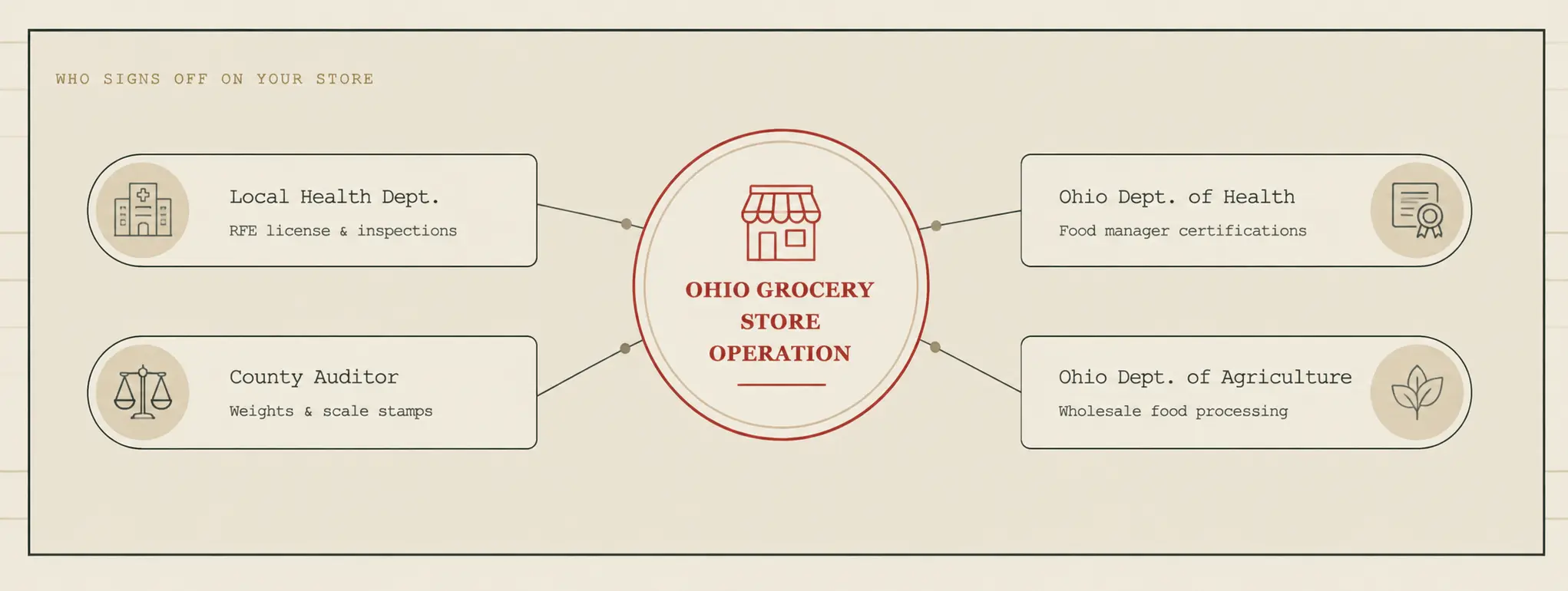
Opening an independent grocery store in Ohio is a stable, community-essential business — but getting there means clearing four separate agencies before a single customer walks in. Whether you're planning an ethnic food market, a boutique neighborhood grocer, or a full-scale supermarket, this file walks through what to register, what to build, and what to certify, in order.
Form your business entity and tax accounts
Before you sign a lease or price a walk-in cooler, your store needs to legally exist and be registered to collect tax.
Register with the Ohio Secretary of State
Most independent grocers file as an LLC to protect personal assets. Submit Articles of Organization through Ohio Business Central. If your storefront name differs from your legal entity name, register a trade name at the same time.
Get an EIN
Apply free through the IRS to open commercial bank accounts and hire staff.
Get an Ohio Regular Vendor's License
Every fixed retail location selling taxable goods needs one. Apply via the Ohio Business Gateway or your County Auditor's office to collect and remit sales tax.
Secure a location and zoning approval
Foot traffic and parking matter, but nothing moves forward until the building itself clears code.
Verify commercial zoning
Check with your city or township planning department before signing a lease — confirm retail food sales are permitted at the address.
Obtain a Certificate of Occupancy
Local building officials inspect the structure, electrical systems, plumbing, and fire safety before you're allowed to occupy the space.
Secure health permits and food safety certifications
This is the cornerstone of grocery compliance in Ohio — everything below runs through your local health jurisdiction.
Retail Food Establishment (RFE) License
Required to sell prepackaged food, fresh produce, meat, or dairy. Apply through your city or county health department — for example, Columbus Public Health or the Cuyahoga County Board of Health.
Plan review submission
Submit your store layout, NSF-certified equipment specs, plumbing schematics, and sink locations — including a dedicated handwashing sink and a three-compartment sink — for approval before construction.
Pre-licensing inspection
An inspector reviews cold- and hot-holding temperatures, floor finishes, and pest prevention before issuing your operating license.
Manager certifications
At least one person on shift needs Level One Person-in-Charge (PIC) certification. At least one manager needs an ODH-approved Level Two food safety course.
Planning to process food on-site?
If you'll package or manufacture products for distribution to other stores, you'll also need a Food Processing License from the Ohio Department of Agriculture.
Weights, measures, and specialty permits
Once your layout is built, checkout equipment and restricted inventory need their own sign-offs.
Scale calibration
Every point-of-sale and produce scale must be inspected, calibrated, and sealed by your county Auditor's Weights and Measures Division before use.
Liquor permits
To sell beer, wine, or low-proof mixed beverages, apply for a C-1 or C-2 retail permit through the Ohio Division of Liquor Control.
Tobacco and vapor licensing
Carrying tobacco or e-cigarette products requires a registration filed with your county auditor.
Set up employer accounts and launch
Before your first cashier or stocker clocks in, three state employer registrations need to be in place.
| Requirement | Governing agency | Action required |
|---|---|---|
| Workers' Compensation | Ohio Bureau of Workers' Compensation | Obtain coverage before the first employee's first shift |
| Unemployment Tax | Ohio Dept. of Job & Family Services | Establish an employer tax account |
| New Hire Reporting | Ohio New Hire Reporting Center | Report every new hire within 20 days |
Then, build toward opening day
Line up relationships with regional distributors — C&S Wholesale Grocers, UNFI, or local produce auctions — set up point-of-sale inventory tracking, and schedule a soft opening for your neighbors.
Working file: mark what's done
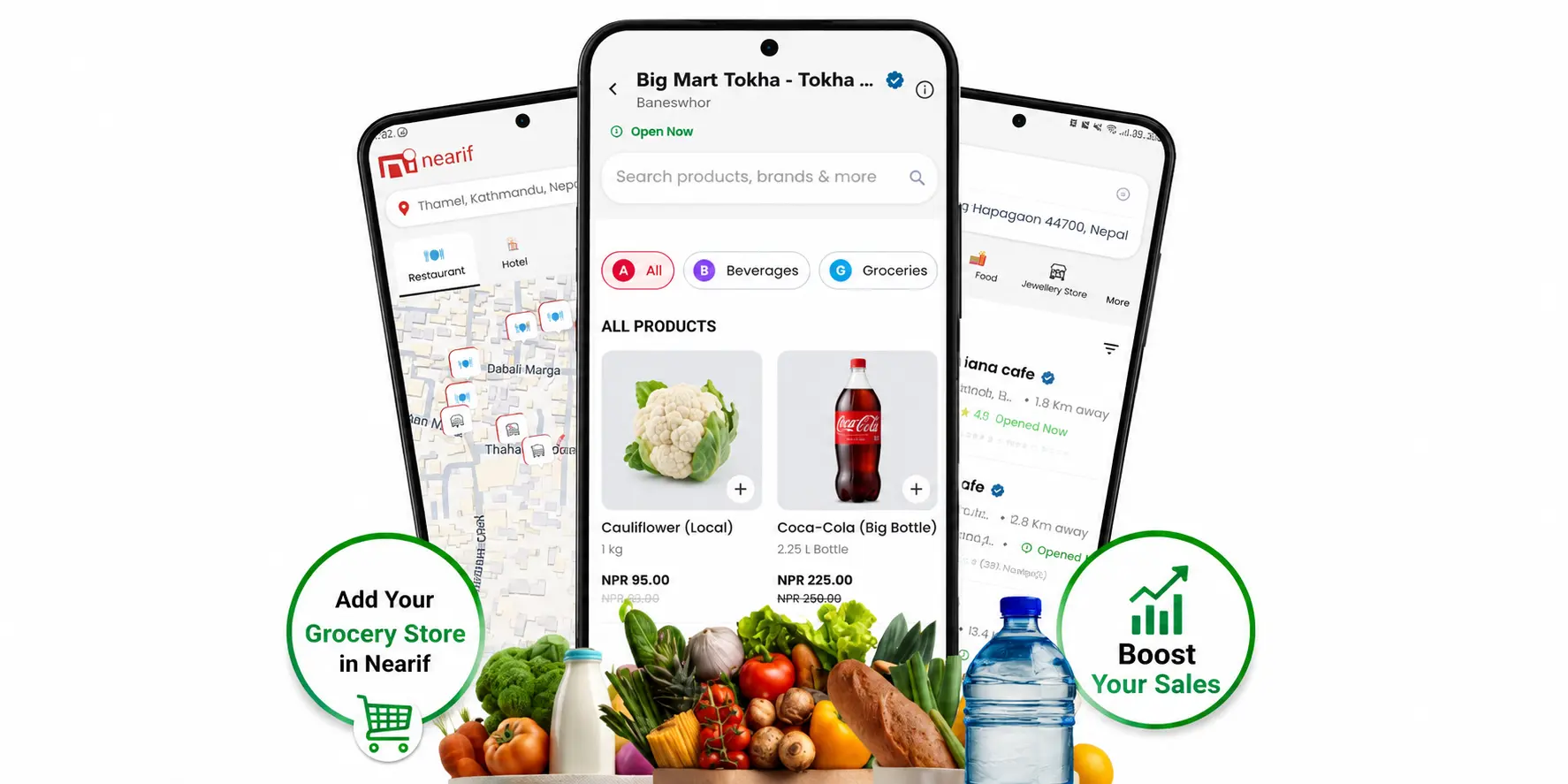
Add your grocery store to Nearif
Get discovered by shoppers across USA the moment your doors open. Download the app and list your store for free — no listing fees, no catches.
Found this useful? Pass it on
More inNearif Guides