10 Productivity Hacks for Entrepreneurs (That Save 5+ Hours a Week)

On this page (13 sections)
- Implement The Eisenhower Matrix for Ruthless Prioritization
- Master Time-Blocking and Batching
- Apply the 80/20 Rule (Pareto Principle)
- Automate Repetitive Operational Workflows
- Build Standard Operating Procedures (SOPs)
- Adopt the "Touch It Once" Rule for Communication
- Use Asynchronous Communication by Default
- Run "Two-Minute Rules" for Micro-Tasks
- Conduct a Weekly Shutdown and Planning Review
- Establish "No-Meeting" Days
- Summary of Weekly Time Saved
- Getting Started Without Overwhelm
- Claim Your 100% Free Business Listing on Nearif.com
Running a business often feels like an endless cycle of fire-fighting. Between managing daily operations, responding to constant notifications, and steering high-level strategy, your day vanishes before you tackle your actual to-do list.
Most entrepreneurs do not suffer from a lack of effort—they suffer from inefficient systems that drain their focus.
Reclaiming 5 or more hours every week does not require working faster or sleeping less. It requires building structured workflows that protect your time. Here are 10 actionable, high-impact productivity hacks designed specifically for business owners who need to work smarter and scale efficiently.
Implement The Eisenhower Matrix for Ruthless Prioritization
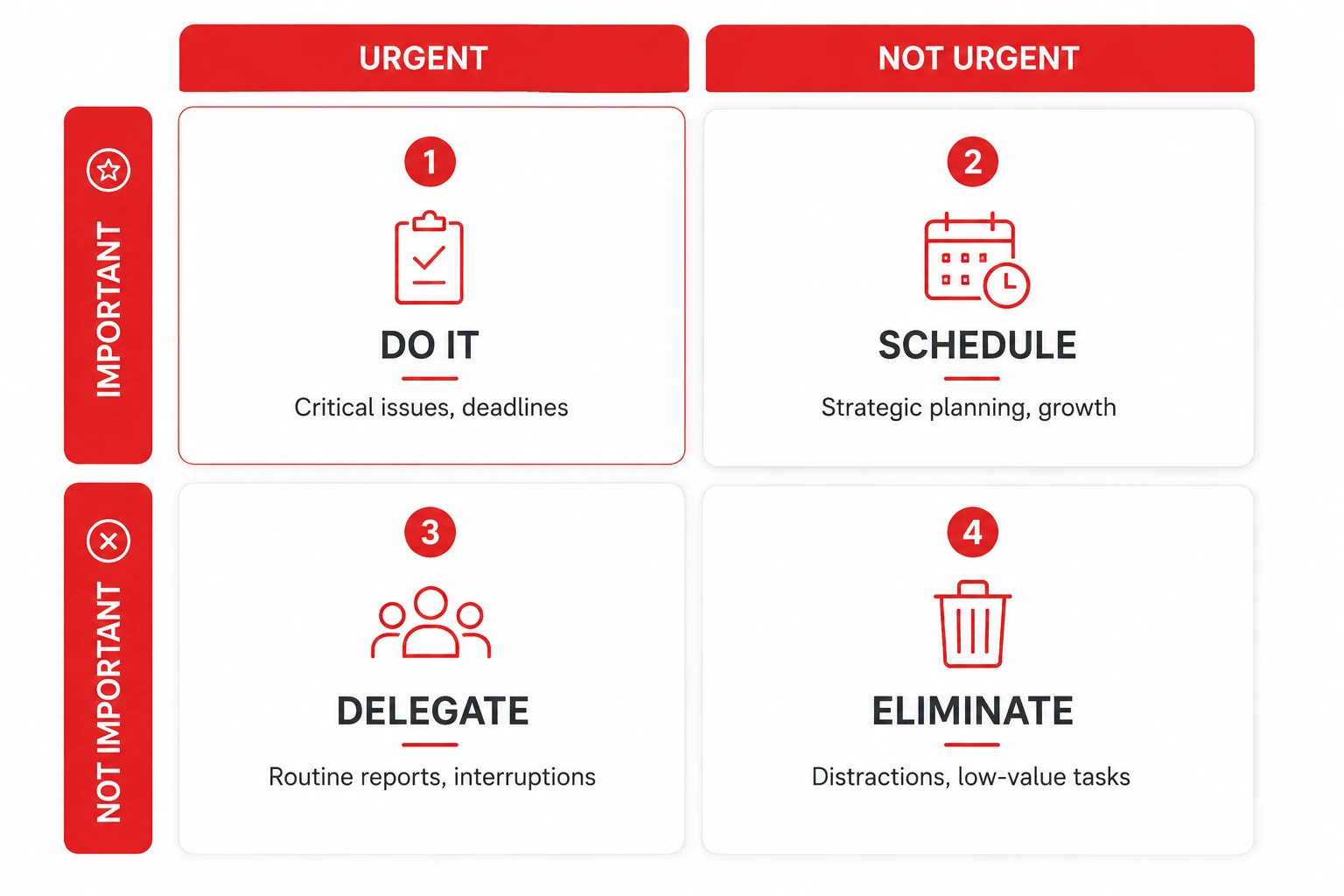
Urgency and importance are rarely the same thing, yet busy schedules often confuse the two. The Eisenhower Matrix forces you to categorize every task on your plate into four distinct quadrants based on urgency and importance.
How to Implement It
- Do First: Urgent and important tasks. These are critical issues, major deadlines, or immediate client bottlenecks.
- Schedule: Important but not urgent. This is where strategic business growth lives—planning, product development, and skill building. Block dedicated time for these on your calendar.
- Delegate: Urgent but not important. Administrative queries, basic scheduling, or routine reporting. Assign these to team members or automated workflows.
- Eliminate: Neither urgent nor important. Cut these activities entirely.
Master Time-Blocking and Batching
Context switching—jumping from an email to a strategy document to a team chat—carries a heavy mental penalty. Research shows it can take up to 23 minutes to regain deep focus after a single interruption.
Time-blocking replaces reactive task lists with dedicated focus zones on your calendar. Instead of checking emails continuously throughout the day, batch similar activities into strict, predictable time slots.
| Time Block | Focus Area | Objective |
|---|---|---|
| 08:30–10:30 AM | Deep Work Zone | High-priority strategic deliverables (no email, no notifications) |
| 10:30–11:30 AM | Batch Operations | Inbox clearance, team updates, quick check-ins |
| 01:00–03:00 PM | External Meetings | Client calls, interviews, vendor discussions |
| 04:30–05:00 PM | Daily Review | Process remaining messages, prep next day's task block |
By grouping similar cognitive tasks together, your brain stays in a single processing mode longer, reducing mental fatigue and boosting output speed.
Apply the 80/20 Rule (Pareto Principle)
The Pareto Principle states that roughly 80% of your results come from 20% of your efforts. In a business context, this means:
- 80% of your revenue likely comes from 20% of your clients.
- 80% of your customer support headaches stem from 20% of your offerings or user types.
- 80% of your operational output comes from 20% of your core activities.
Action Plan
Audit your calendar and income statements once a month. Identify the specific 20% of activities, offerings, or partnerships driving the vast majority of your business results. Double down on those high-leverage areas, and systematically streamline, renegotiate, or fire the bottom 20% that cause disproportionate friction for minimal return.
Automate Repetitive Operational Workflows
If you perform a manual digital task more than three times a week, it should be automated. Modern business tools eliminate the need for manual data entry, hand-typed follow-ups, or manual scheduling.
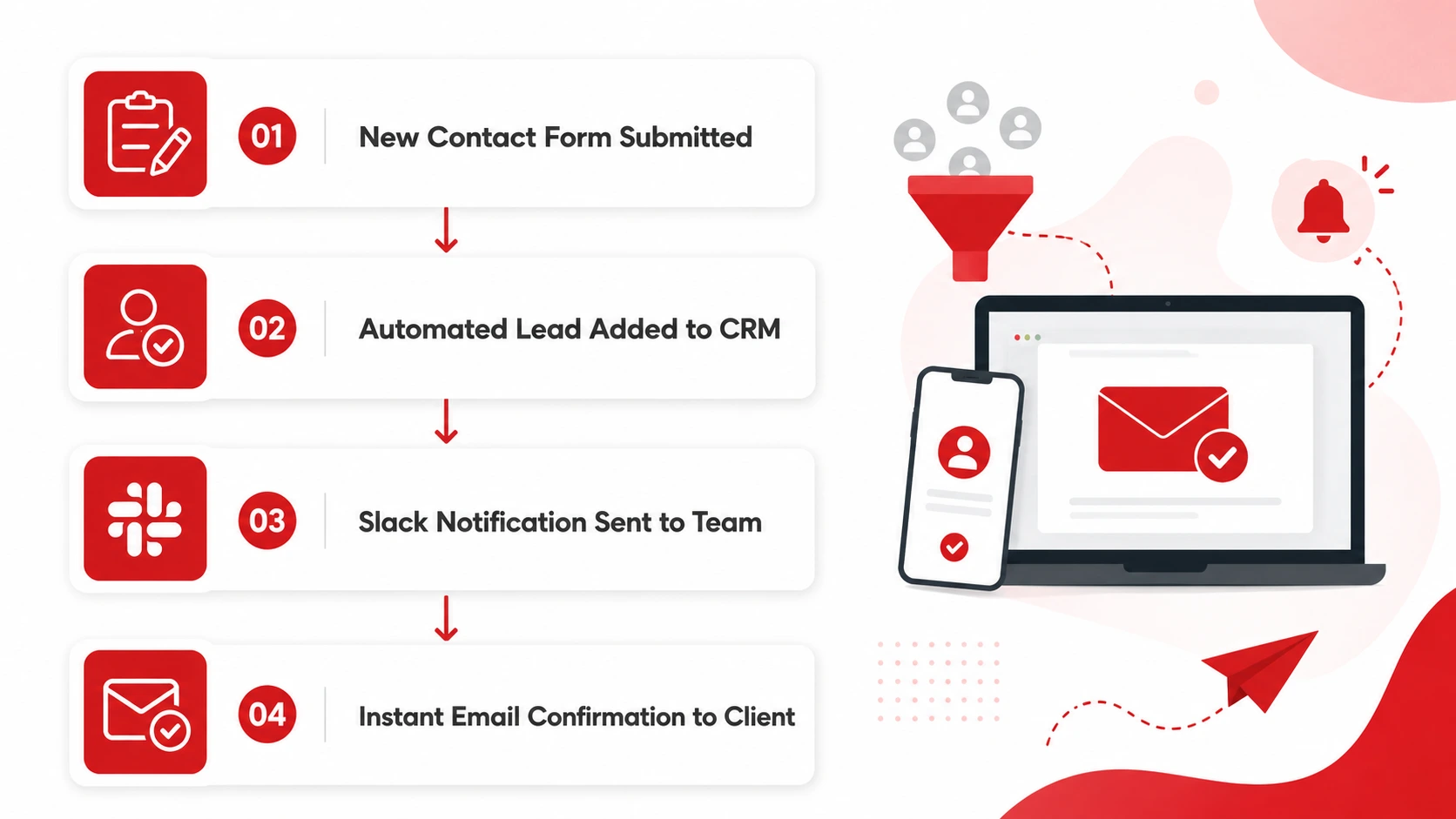
High-Impact Automations
- Self-Service Scheduling: Stop back-and-forth email tag for meeting times. Use self-service calendar tools where clients select open slots based on your pre-set availability rules.
- Lead Ingestion: Connect contact forms directly to your CRM or internal chat channels so lead details flow automatically.
- Invoicing & Receipts: Set up recurring billing cycles and automated payment reminders for late invoices.
Build Standard Operating Procedures (SOPs)
A primary reason founders struggle to delegate is that tasks feel faster to "just do myself." However, doing a 15-minute task yourself every week costs 13 hours over a year. Building clear Standard Operating Procedures (SOPs) turns one-off training into a scalable company asset.
The Fast SOP Framework
- Record as You Work: Next time you perform a routine task (e.g., publishing a blog post, running payroll, setting up a client account), record your screen using a video tool while speaking your steps out loud.
- Document the Steps: Convert the video into a simple bulleted checklist with clear screenshots.
- Centralize the Library: Store SOPs in an organized internal wiki or knowledge base accessible to your entire team.
When team members hit a roadblock, direct them to the SOP library first. This builds an independent team and frees you from answering the same questions repeatedly.
Adopt the "Touch It Once" Rule for Communication
Micro-delays in decision-making consume vast amounts of mental energy. The "Touch It Once" rule applies primarily to your inbox, physical paperwork, and team messages.
When you open an email or message, you must choose one of three actions immediately:
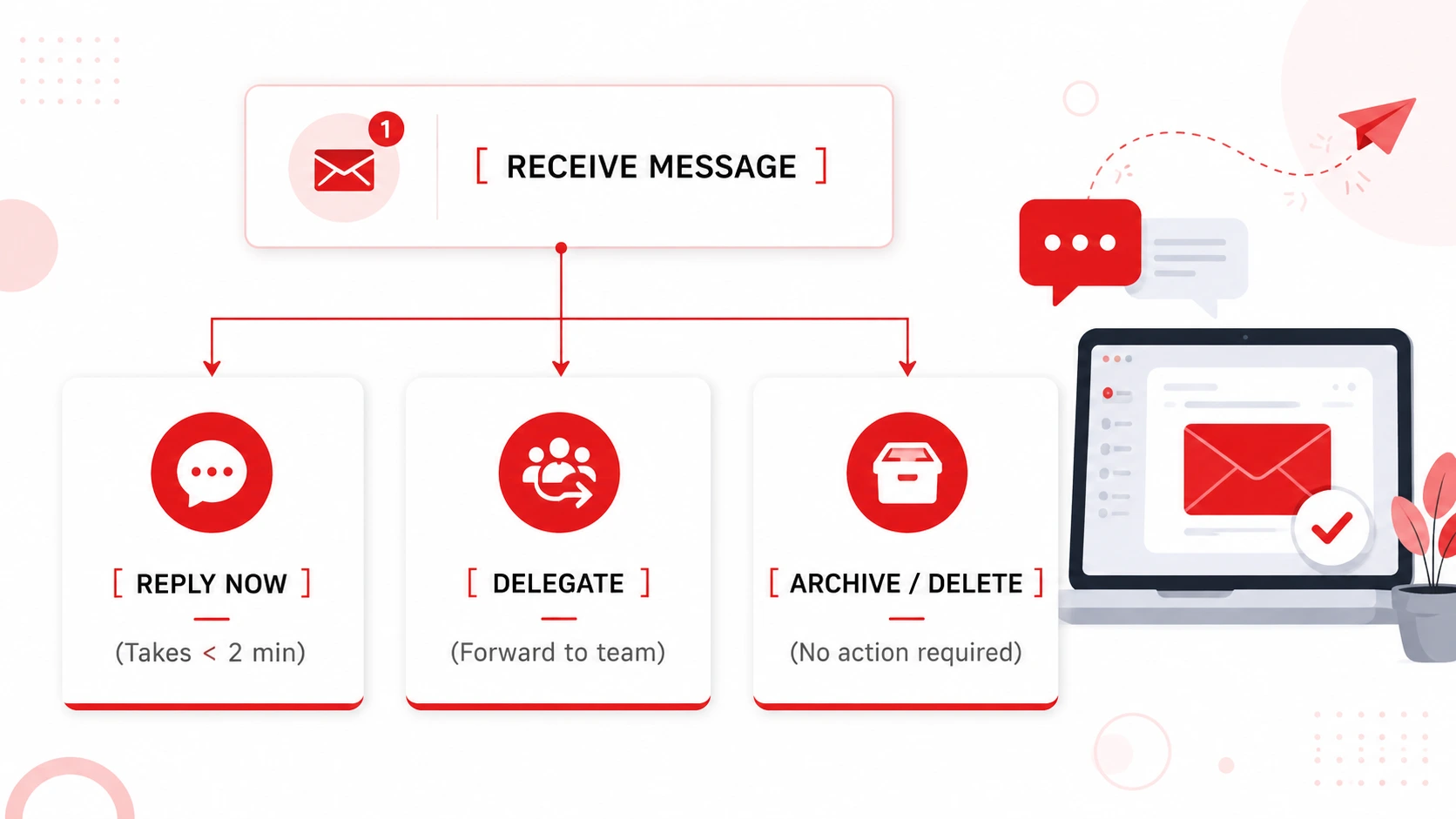
If a response requires significant research or deep work, schedule a dedicated calendar block to address it. Avoid reading a message, marking it unread, and letting it sit in your mind to be re-read three more times later.
Use Asynchronous Communication by Default
Real-time meetings are often an inefficient way to share status updates or get simple approvals. Shift your team culture toward asynchronous communication—where information is shared without expecting an immediate real-time response.
How to Shift Away from Meetings
- Replace Status Meetings with Written Bullet Summaries: Have team members post weekly highlights, lowlights, and blockers in a central channel every Monday morning.
- Use Short Video Messages: Instead of scheduling a 30-minute call to explain a complex layout, strategy, or bug, record a 3-minute screen walk-through and send the link.
- Define Response Expectations: Establish clear guidelines that non-urgent internal communications do not require an instant reply. This protects focus time for everyone on the team.
Run "Two-Minute Rules" for Micro-Tasks
Small administrative tasks—approving a quick expense, confirming an appointment, signing a document—tend to accumulate until they feel like a daunting wall of work.
The Two-Minute Rule (popularized by productivity expert David Allen) is straightforward: If a task takes less than two minutes to complete, do it immediately.
Do not add a 90-second task to an execution list, assign a priority tag, or schedule it for Thursday. The administrative overhead of tracking a micro-task takes longer than performing the task itself. Clearing these minor items instantly prevents inbox clutter and keeps work flowing smoothly.
Conduct a Weekly Shutdown and Planning Review
Jumping straight into Monday morning without a clear plan forces you into a reactive state, spending your first few hours deciding what to work on.
Set aside 30 minutes every Friday afternoon (or Sunday evening) for a dedicated Weekly Review.
The Weekly Review Checklist
- Inbox to Zero: Process remaining operational messages using the "Touch It Once" rule.
- Review Open Projects: Check progress against quarterly milestones and update timelines.
- Identify Top 3 Priorities: Select the three absolute must-complete outcomes for the upcoming week.
- Calendar Blocking: Lock in deep-work blocks on your calendar for those top three priorities before open meeting slots fill up.
Starting Monday with an active plan lets you dive directly into productive work without hesitation.
Establish "No-Meeting" Days
Frequent schedule fragmentation destroys deep concentration. A calendar peppered with 30-minute meetings every two hours leaves useless, awkward gaps in between where substantive work rarely happens.
Establish at least one full day per week with zero meetings (Tuesday or Thursday works best for most teams).
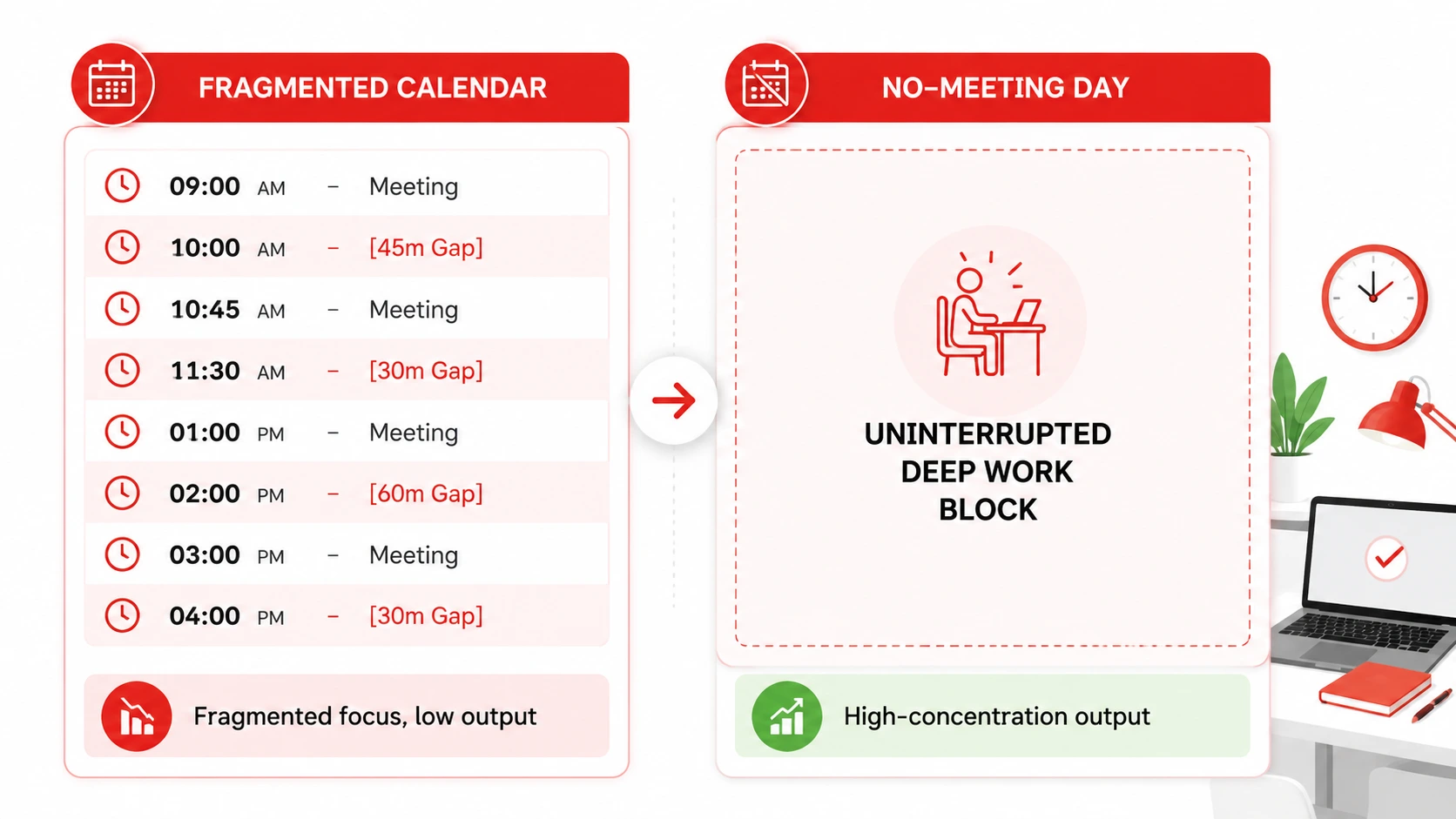
Guard this block rigorously. Use this uninterrupted time for high-level strategy, product design, writing, or complex problem-solving that requires sustained focus.
Summary of Weekly Time Saved
| Productivity Hack | Core Benefit | Time Saved |
|---|---|---|
| 1. Eisenhower Matrix | Eliminates non-essential, low-value work | ~1.5 Hrs |
| 2. Time-Blocking | Reduces context-switching overhead | ~1.0 Hr |
| 3. 80/20 Rule | Focuses effort on highest-margin activities | ~1.0 Hr |
| 4. Automation | Eliminates manual data entry and scheduling | ~0.75 Hrs |
| 5. SOPs | Reduces constant team interruptions | ~1.0 Hr |
| 6. "Touch It Once" | Stops re-reading emails and messages | ~0.5 Hrs |
| 7. Async Communication | Replaces status meetings with quick updates | ~1.0 Hr |
| 8. Two-Minute Rule | Clears micro-tasks without tracking overhead | ~0.5 Hrs |
| 9. Weekly Review | Prevents Monday morning drift and hesitation | ~0.75 Hrs |
| 10. No-Meeting Days | Reclaims fragmented gaps between calls | ~1.5 Hrs |
| Total Potential Savings | ~9.5 Hrs / Wk | |
Getting Started Without Overwhelm
Trying to adopt all 10 of these systems at once can feel counterproductive. Instead, treat your productivity as an evolving system:
- Pick Two Hacks First: Choose two strategies above that address your biggest daily bottlenecks (for example, Time-Blocking and Self-Service Scheduling Automations).
- Run a 14-Day Trial: Implement them consistently for two weeks until they become habit.
- Measure the Impact: Track where your extra hours go, refine your setup, and add the next hack to your routine.
Productivity for entrepreneurs is not about packing more tasks into every hour. It is about building reliable operational systems that protect your mental energy, allowing you to focus on growing your business.
Claim Your 100% Free Business Listing on Nearif.com
Boost your local search visibility and start getting discovered by new customers today no credit card required.
List Your Business Today →Instant setup • Takes less than 2 minutes
Found this useful? Pass it on
More inNearif Guides