How to Grow a Business Without Hiring More Staff
On this page (13 sections)
- Why Growing Without Hiring Matters
- Automate Repetitive Business Tasks
- Improve Internal Processes and Workflow
- Focus Only on High-Value Activities
- Outsource Instead of Hiring Full-Time Staff
- Use Technology to Scale Operations
- Increase Revenue From Existing Customers
- Build Customer Self-Service Systems
- Use Data to Make Better Decisions
- Strengthen Digital Marketing Assets
- Adopt a Scalable Business Model
- Final Thoughts
- List Your Business on Nearif and Reach Verified Local Customers
Smart Strategies for Sustainable Business Growth
Growing a business is exciting — but it often comes with a costly assumption: “If we want to grow, we must hire more people.”
In reality, uncontrolled hiring can shrink profit margins, increase management overhead, and slow down execution. Salaries, onboarding, coordination, and communication complexity can turn growth into stress.
Today’s most effective companies scale differently. They grow through systems, automation, and leverage — not headcount. With the right structure, a small team can outperform much larger organizations.
This guide explains how to grow your business without hiring more staff, using methods applied by high-performing startups, modern service companies, and scalable digital businesses worldwide.
Why Growing Without Hiring Matters
Hiring increases fixed costs permanently — which means even if revenue dips, expenses remain. Lean growth keeps your business profitable and flexible. It helps you:
- Maintain strong profit margins
- Reduce operational risk
- Scale faster without complexity
- Stay agile during market changes
- Avoid heavy HR, payroll, and compliance burdens
Businesses built on people alone often hit a ceiling. Businesses built on systems can scale further, with fewer surprises.
Automate Repetitive Business Tasks
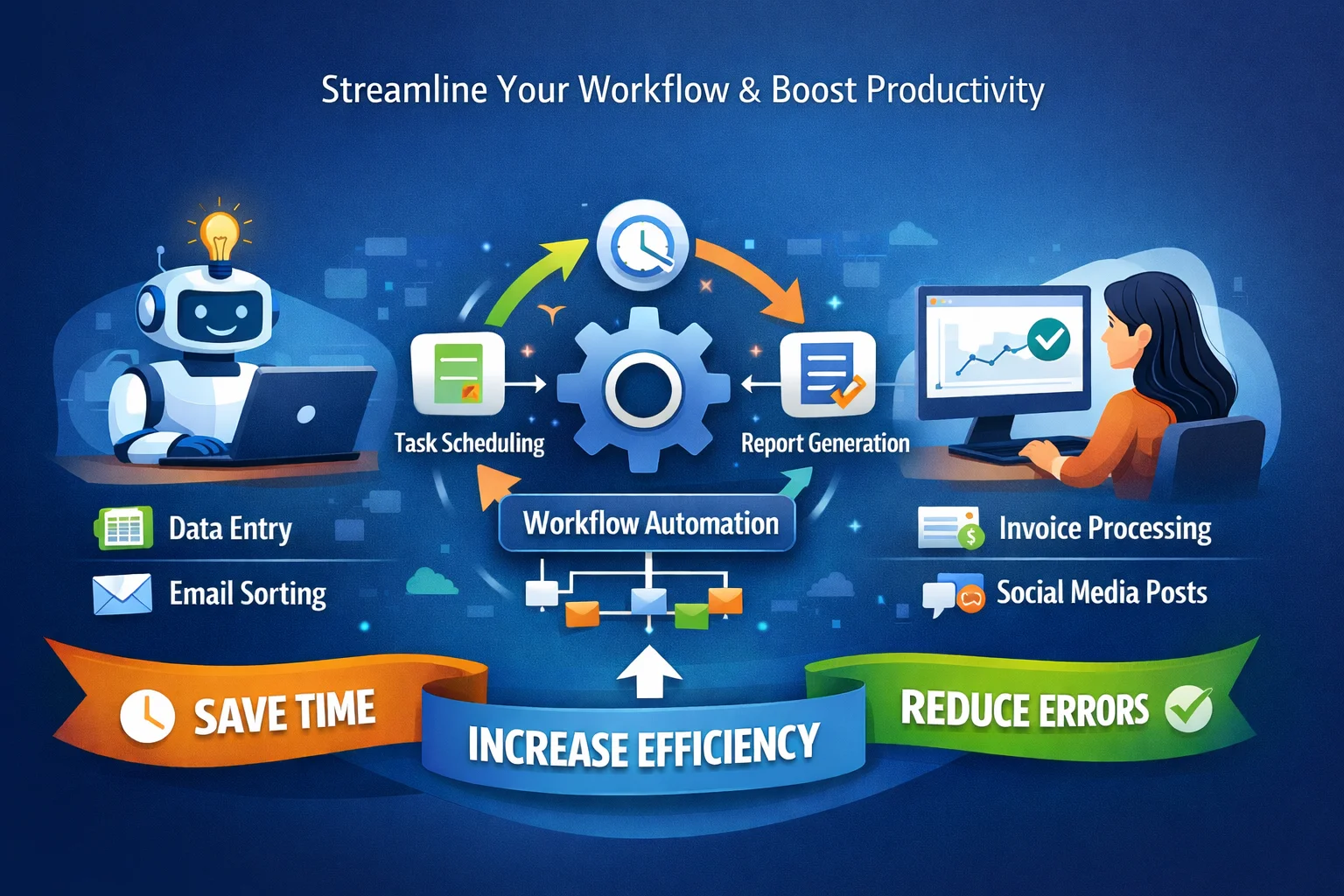
Automation is one of the highest-return investments you can make. Most businesses lose hundreds of hours each month doing tasks that software can handle instantly and consistently.
Common tasks to automate:
- Email marketing sequences and follow-ups
- Appointment scheduling and confirmations
- Customer onboarding messages and checklists
- Invoice creation, payment links, and reminders
- CRM updates, tagging, and deal-stage movement

Improve Internal Processes and Workflow
Growth rarely fails because of insufficient staff. It fails because the team runs on unclear systems: duplicated work, delayed decisions, and constant firefighting.
Build operational clarity by:
- Documenting standard operating procedures (SOPs)
- Defining ownership for every task (one clear “owner”)
- Removing unnecessary approvals and bottlenecks
- Standardizing how work is requested, reviewed, and delivered
- Using one project management tool consistently
When workflows are optimized, teams commonly increase productivity by 30–50% without adding headcount.

Focus Only on High-Value Activities
Not all work contributes equally to growth. Many tasks look productive but don’t move revenue. High-performing teams protect time for high-impact work.
Prioritize:
- Sales conversations and pipeline movement
- Customer retention and satisfaction improvements
- Marketing conversion rate optimization
- Product/service quality improvements
- Strategic planning and partnerships

Outsource Instead of Hiring Full-Time Staff
Hiring locks you into recurring costs. Outsourcing gives you flexibility and lets you access specialists without long onboarding.
Common outsourcing areas:
- Content writing, SEO, and copywriting
- Graphic design and video editing
- Customer support (chat/email)
- Bookkeeping and payroll support
- Paid ads management and analytics setup
- IT support and maintenance
Keep your core team focused on your competitive advantage, and outsource repeatable specialist output.

Use Technology to Scale Operations
Technology can replace entire layers of manual coordination. The right tools create visibility and speed across your operations.
Use tools to:
- Manage customer databases (CRM)
- Track performance and KPIs in real time
- Automate reporting for finance and sales
- Understand customer behavior and buying patterns
- Improve forecasting for revenue and inventory
Cloud-based platforms also enable remote collaboration and centralized data — keeping execution smooth as you grow.

Increase Revenue From Existing Customers
You don’t always need more customers. Often, the fastest route to growth is increasing the value you deliver to the customers you already serve.
Increase revenue per customer by:
- Upselling premium versions or faster delivery
- Cross-selling related services
- Bundling complementary products
- Introducing subscriptions or retainers
- Improving onboarding and customer education
Build Customer Self-Service Systems
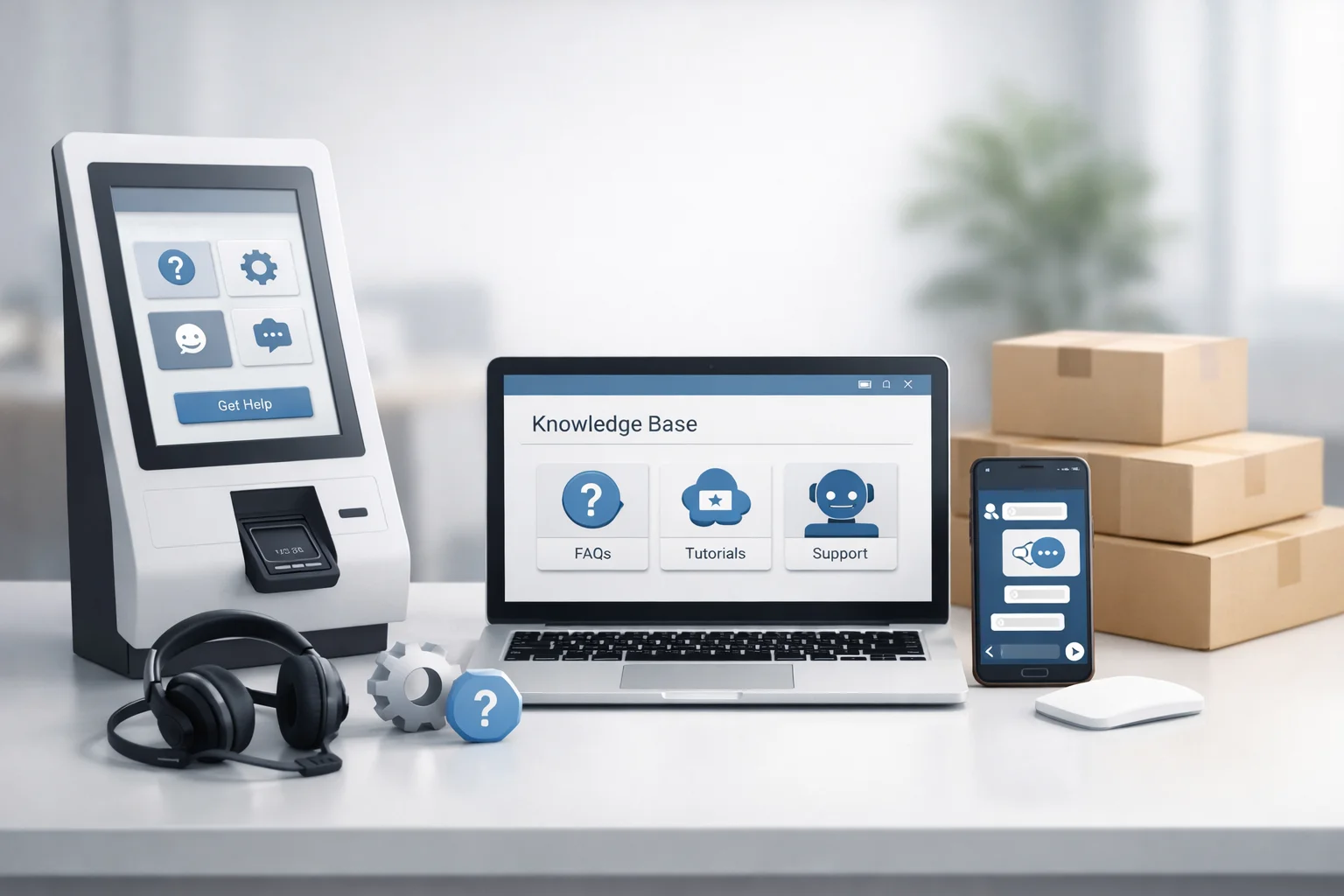
Customers value speed. Self-service reduces your support workload while improving customer experience. It also standardizes answers and reduces repeated questions.
High-ROI self-service tools include:
- FAQ knowledge bases and help centers
- Chatbots for common questions
- Online booking and rescheduling systems
- Customer portals and dashboards
- Short tutorials and onboarding videos
The goal is to remove dependency on your team for routine requests.

Use Data to Make Better Decisions
Data removes guesswork. When you measure performance consistently, you can improve what matters and stop wasting time on what doesn’t.
Track metrics like:
- Conversion rate (visitors → leads → customers)
- Customer acquisition cost (CAC)
- Customer lifetime value (LTV)
- Churn rate and retention rate
- Marketing ROI and sales cycle length

Strengthen Digital Marketing Assets
Unlike staff, digital assets work around the clock. When built correctly, they generate leads and sales continuously, even while you sleep.
Build assets like:
- SEO-optimized blog posts and pillar pages
- Evergreen landing pages designed to convert
- Automated email nurturing funnels
- Lead magnets (templates, guides, checklists)
- Scheduled social content and repurposed posts
These assets compound over time: more content → more traffic → more leads → more sales.

Adopt a Scalable Business Model
Some business models grow linearly with labor. Others scale with systems. The key is simple: revenue should increase faster than workload.
Scalable models include:
- Digital products and templates
- Online courses and training programs
- Membership communities
- SaaS or subscription platforms
- Consulting with standardized systems and deliverables
- E-commerce with third-party fulfillment
Final Thoughts
Growing without hiring more staff isn’t a limitation — it’s a competitive advantage. Businesses built on systems, automation, data, and leverage grow faster and remain profitable even during uncertainty.
The future of business growth isn’t about bigger teams — it’s about better systems.
List Your Business on Nearif and Reach Verified Local Customers
Get discovered by nearby customers, build trust with a verified profile, and grow your business locally.
Found this useful? Pass it on
More inTips and Tricks