How Local Festivals Boost Business Sales
On this page (10 sections)
- The Economic Power of Community Celebrations
- Understanding the Festival Customer Mindset
- Direct Sales Opportunities: More Than Just Foot Traffic
- Building Brand Awareness and Community Connections
- Strategic Festival Participation: Maximizing Your Investment
- Long-Term Benefits Beyond the Festival Weekend
- Measuring Festival Success: Beyond Revenue Numbers
- Overcoming Common Festival Challenges
- The Future of Festival Marketing
- Conclusion: Your Festival Success Story Starts Now
When Sarah, owner of a small bakery in downtown Portland, saw her monthly revenue jump by 340% during the three-day Rose Festival, she realized she'd been sitting on a goldmine without knowing it. Local festivals aren't just colorful community gatherings – they're powerful economic engines that can transform struggling businesses into thriving enterprises overnight.
From the vibrant Day of the Dead celebrations in San Antonio to the quirky cheese rolling festivals in small Wisconsin towns, local festivals create unique opportunities for businesses to connect with customers, boost sales, and build lasting relationships within their communities. But here's the catch: most business owners treat festivals as happy accidents rather than strategic opportunities.
The Economic Power of Community Celebrations
Local festivals generate billions of dollars in economic activity across the United States annually. According to the International Festivals and Events Association, community festivals contribute over $40 billion to the U.S. economy each year. These events don't just benefit large corporations – they create ripple effects that can make or break small businesses.
Consider the Tulip Festival in Holland, Michigan. This annual spring celebration attracts over 500,000 visitors to a city of just 33,000 residents. Local restaurants report revenue increases of 200-400% during festival week, while retail shops often sell more merchandise in four days than they typically do in an entire month.
The magic happens because festivals create what economists call "compressed demand" – a concentrated period where consumer spending skyrockets in a specific geographic area. Smart business owners who understand this phenomenon can position themselves to capture a significant share of this temporary economic boom.
Understanding the Festival Customer Mindset
Festival-goers operate in a unique psychological state that savvy business owners can leverage. During celebrations, people are more relaxed, social, and willing to spend money on experiences and impulse purchases. They're in "vacation mode" even if they're in their own hometown, which means they're more likely to try new products, visit unfamiliar businesses, and spend beyond their usual budgets.
Dr. Amanda Rodriguez, a consumer behavior specialist at Northwestern University, explains: "Festivals create what we call 'experiential buying motivation.' People aren't just purchasing products – they're buying memories, stories, and social connections. This psychological shift can increase average transaction values by 150-300% compared to regular shopping experiences."
This mindset shift explains why a simple food truck can generate $5,000-$15,000 in revenue during a weekend festival, compared to their typical $500-$800 daily earnings. Festival customers are primed to spend, but businesses need to meet them where they are – both physically and psychologically.
Direct Sales Opportunities: More Than Just Foot Traffic
The most obvious benefit of local festivals is the dramatic increase in foot traffic. However, successful businesses understand that festival crowds represent more than just numbers – they represent diverse customer segments that might never otherwise discover their products or services.
Food and Beverage Businesses see the most immediate impact. Restaurants near festival venues often experience 300-500% increases in daily revenue. Food vendors who participate directly in festivals can earn 50-75% of their monthly revenue in a single weekend. The key is offering festival-appropriate menu items – portable, Instagram-worthy foods that people can eat while walking and socializing.
Retail Businesses benefit from impulse buying and gift purchasing. Festival attendees often buy souvenirs, local crafts, and unique items they discover while exploring. Clothing boutiques, art galleries, and specialty stores frequently report their highest sales days of the year during major local festivals.
Service-Based Businesses can capitalize on festival timing in creative ways. Hair salons offer festival-themed styling, photographers provide event coverage services, and even tax preparation services have found ways to connect with festival crowds through community booths and networking opportunities.
Building Brand Awareness and Community Connections
Beyond immediate sales, festivals provide invaluable brand exposure opportunities that would cost thousands of dollars through traditional advertising channels. When your business sponsors a festival stage or sets up an engaging booth, you're putting your brand directly in front of thousands of potential customers in a positive, memorable context.
Local festivals create what marketing experts call "halo effects" – positive associations that extend far beyond the event itself. Customers who discover your business during a fun festival experience are more likely to return throughout the year and recommend your services to friends and family.
Take the example of Mountain View Hardware in Asheville, North Carolina. By sponsoring the annual craft beer festival and offering "brew-themed" tool demonstrations, they transformed their image from a dusty old hardware store into a hip, community-focused business. Their year-round sales increased by 25% following their festival involvement, and they gained over 300 new regular customers.
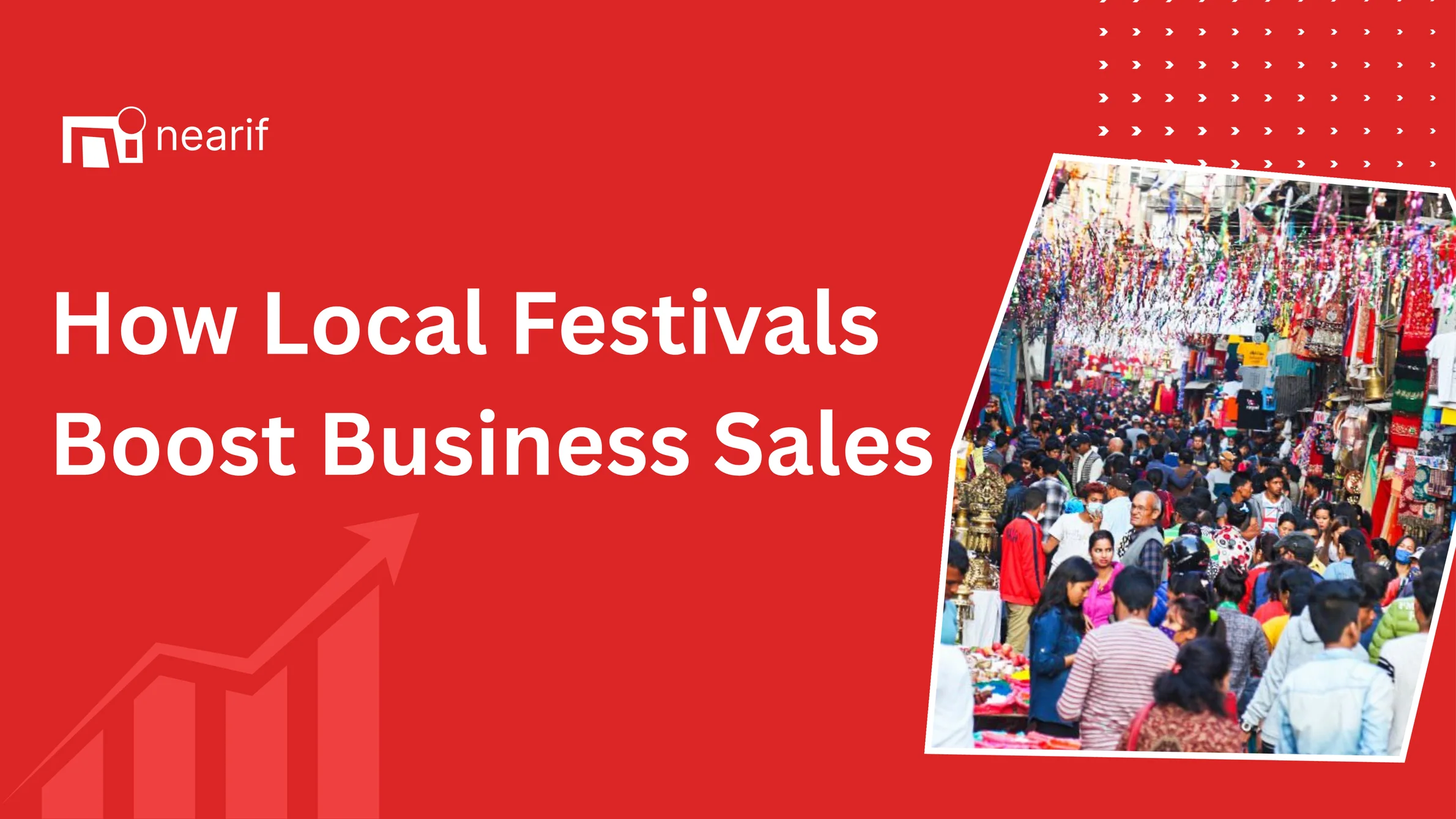
Similarly, in Nepal, Dashain festival creates extraordinary opportunities for local businesses. Maya Shrestha, who owns a traditional kurta shop in Kathmandu, discovered this firsthand. During Dashain 2024, her sales jumped 450% as families prepared for the festival celebrations by purchasing new traditional clothing. However, Maya's real breakthrough came when she listed her business on local platforms like Nearif, a location-based discovery service. By appearing in local search results and festival shopping guides, she attracted customers who might never have found her small shop tucked away in Thamel's narrow streets. The digital visibility during Dashain season helped her capture both local families and tourists seeking authentic Nepali attire, transforming her seasonal spike into sustained year-round growth.
Strategic Festival Participation: Maximizing Your Investment
Successful festival participation requires more than just showing up. Smart business owners approach festivals with clear strategies and specific goals.
Pre-Festival Planning is crucial. Research the festival's typical attendance, demographic breakdown, and vendor policies. Successful businesses start planning 3-6 months in advance, securing prime booth locations and developing festival-specific marketing materials.
Product and Service Adaptation can make the difference between mediocre and exceptional festival performance. Offer special festival editions, limited-time promotions, or exclusive products that create urgency and excitement. A local bookstore might create custom festival bookmarks, while a coffee shop could offer themed drinks named after festival activities.
Interactive Experiences draw crowds and create memorable connections. Instead of simply selling products, create experiences that engage festival-goers. Offer demonstrations, mini-workshops, or photo opportunities that encourage social media sharing and word-of-mouth marketing.
Data Collection turns one-time festival customers into long-term relationships. Collect email addresses through contests, loyalty programs, or exclusive offers. Many businesses report that festival-acquired customers have higher lifetime values than traditional customers because they discovered the business in a positive, experiential context.
Long-Term Benefits Beyond the Festival Weekend
The real value of festival participation extends far beyond the event itself. Festivals create opportunities for businesses to build lasting relationships with customers, other businesses, and community leaders.
Customer Loyalty Development happens naturally when customers associate your business with positive community experiences. Festival customers often become brand ambassadors, sharing their discoveries with friends and family long after the event ends.
Networking Opportunities abound at festivals. Business owners connect with potential partners, suppliers, and collaborators. Many successful business partnerships have started with casual conversations at festival vendor meetings or community planning sessions.
Market Research opportunities emerge organically during festivals. You can test new products, gather customer feedback, and observe competitor strategies in a low-risk environment. Festival interactions provide valuable insights into customer preferences and market trends.
Community Relationship Building strengthens your business's local connections. Active festival participation demonstrates community commitment, which builds goodwill with local customers, government officials, and other business owners. This social capital pays dividends throughout the year in the form of referrals, collaborative opportunities, and community support during challenging times.
Measuring Festival Success: Beyond Revenue Numbers
While revenue spikes are exciting, successful businesses track multiple metrics to evaluate festival performance and improve future participation.
Customer Acquisition Costs at festivals are often significantly lower than traditional marketing channels. If you acquire 100 new customers at a festival for a $500 booth fee, your customer acquisition cost is just $5 per customer – compared to $20-$50 per customer through digital advertising.
Social Media Engagement metrics show how festival participation amplifies your online presence. Track hashtag mentions, photo tags, and social media followers gained during and after festivals. Many businesses see 200-400% increases in social media engagement during festival periods.
Long-term Customer Value measurements reveal the true return on festival investment. Track how many festival customers return within 30, 60, and 90 days after the event. Calculate the lifetime value of customers acquired through festival participation compared to other acquisition channels.
Overcoming Common Festival Challenges
Festival participation isn't without challenges, but prepared businesses can navigate common obstacles successfully.
Weather Dependency affects most outdoor festivals. Successful vendors prepare for various weather conditions with appropriate tents, displays, and backup plans. Some businesses have found that rainy festival days actually increase sales as people seek shelter in covered vendor areas.
Staffing Requirements can strain small businesses during busy festival periods. Cross-train employees to handle increased volume, consider hiring temporary festival-specific staff, or partner with other businesses to share resources and personnel.
Inventory Management becomes critical when sales can be 5-10 times normal levels. Experienced festival vendors maintain detailed sales records from previous years and prepare inventory accordingly. Running out of popular items can cost thousands in lost revenue.
The Future of Festival Marketing
As communities increasingly recognize the economic value of local celebrations, festival opportunities continue to expand. Virtual and hybrid festival formats, popularized during the pandemic, have created new possibilities for business participation and customer engagement.
Smart businesses are already preparing for the next generation of festival marketing by developing omnichannel strategies that blend physical festival presence with digital engagement. QR codes, social media integration, and mobile apps are becoming standard tools for maximizing festival ROI.
Conclusion: Your Festival Success Story Starts Now
Local festivals represent one of the most underutilized growth opportunities available to small and medium businesses. With proper planning, strategic thinking, and community engagement, your business can transform festival participation from a nice-to-have into a must-have growth strategy.
The key is starting small, learning from each experience, and gradually building your festival expertise. Whether you're a restaurant looking to boost weekend sales, a retail store seeking new customers, or a service business hoping to build brand awareness, local festivals offer pathways to growth that simply don't exist through traditional marketing channels.
Sarah's bakery now generates 40% of its annual revenue through festival participation across six different local events. What started as a happy accident has become the cornerstone of her business strategy – and it can become yours too.
The next festival in your community isn't just a celebration – it's a business opportunity waiting to be seized. The question isn't whether festivals can boost your sales, but rather how much you're willing to invest in making that boost as large as possible.
Found this useful? Pass it on
More inTips and Tricks